How Intuitive Eating Can Help You Break Free From Diet Mentality and make peace with food
Many people I work with come into therapy feeling confused, exhausted, or disconnected when it comes to food. They often describe feeling caught between wanting to “do better” with eating and feeling resentful, ashamed, or overwhelmed by the constant rules in their head. If this resonates with you, intuitive eating may offer a gentler and more sustainable way forward.
Intuitive eating is an approach that focuses on rebuilding trust with your body rather than controlling it. Instead of following external rules about what, when, or how much you should eat, intuitive eating invites you to turn inward and begin listening to your body’s signals, needs, and cues. For many people, this can feel unfamiliar or even uncomfortable at first, especially if food has long been tied to discipline, morality, or self worth.
At its core, intuitive eating is about relationship. It is about repairing the relationship you have with food, with your body, and often with yourself.
Moving Away From Diet Culture
Most of us were raised in a culture that praises restriction and self control while pathologizing hunger, weight changes, and pleasure around food. Over time, these messages can create a sense that our bodies are untrustworthy or that we must constantly manage or override our needs to be acceptable.
Intuitive eating gently challenges these beliefs. Rather than asking “Am I being good or bad with food,” the question becomes “What does my body need right now.” This shift alone can reduce a great deal of anxiety and internal conflict.
For those who struggle with chronic dieting, emotional eating, or cycles of restriction and overeating, intuitive eating helps interrupt the all or nothing patterns that often keep people stuck.
Relearning Hunger, Fullness, and Satisfaction
Many people have learned to ignore hunger cues or push past fullness, either intentionally or unintentionally. Over time, this can make it difficult to know what your body is asking for at all.
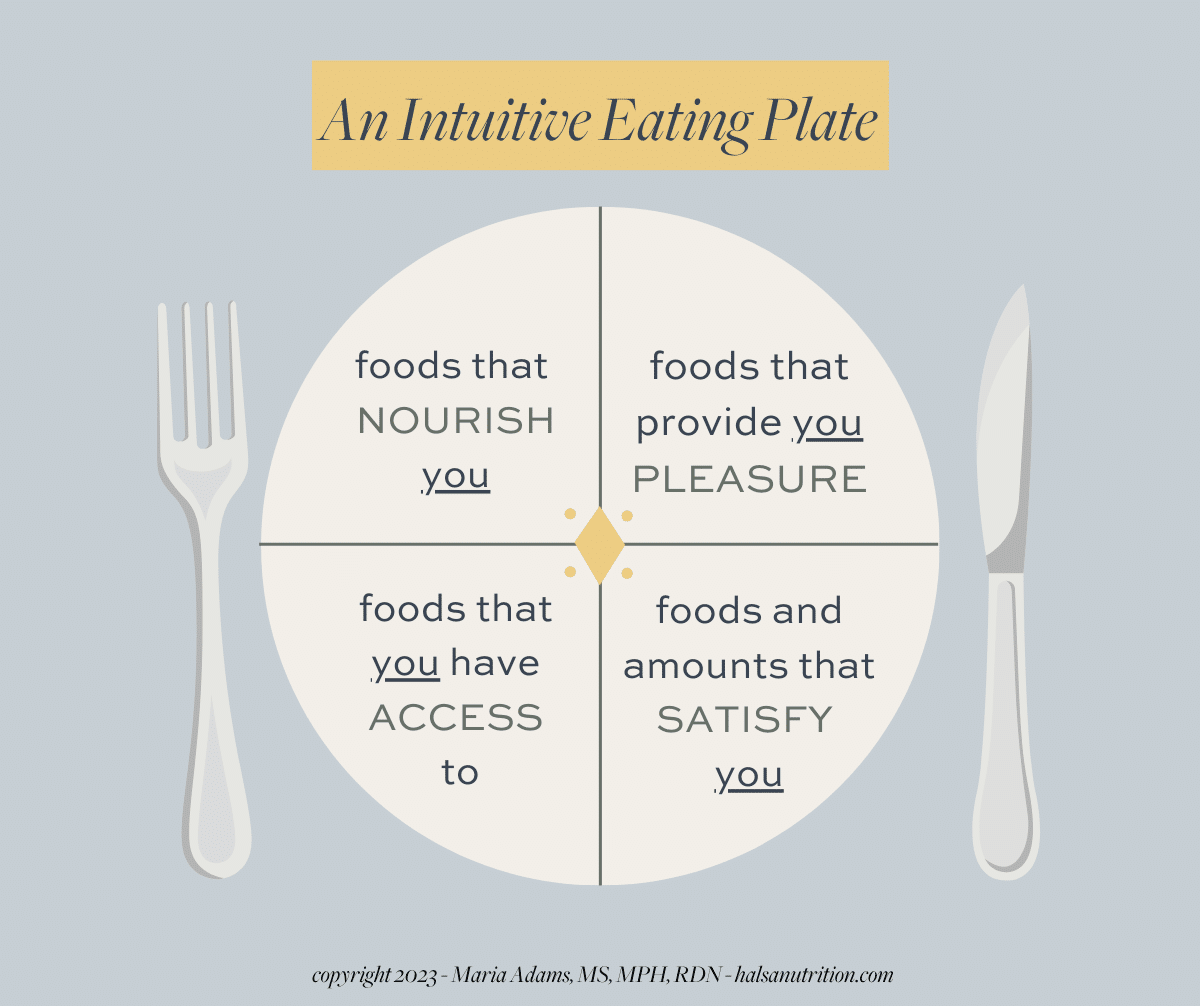
Intuitive eating supports the process of relearning these signals with curiosity rather than judgment. Hunger is no longer treated as a failure. Fullness is not something to fear. Satisfaction becomes an important part of eating, not something to earn or avoid.
This does not mean eating perfectly or intuitively all the time. It means practicing attunement and flexibility and allowing your body to be part of the conversation again.
Emotional Safety Around Food
For individuals who grew up in environments where food was controlled, moralized, or used as a way to manage emotions, eating can carry a lot of emotional weight. There may be guilt for wanting certain foods or fear of losing control if rules are relaxed.
Intuitive eating recognizes that food is not just fuel. It is also connected to comfort, culture, connection, and care. When food is no longer restricted or labeled as forbidden, it often loses some of its emotional charge. Over time, this can reduce binge cycles, shame, and the constant mental preoccupation with eating.
Importantly, intuitive eating is not about ignoring emotions or using food as the only coping strategy. It is about creating enough safety around food that emotions can be addressed with more clarity and compassion.
A More Compassionate Way Forward
When approached thoughtfully and with guidance, intuitive eating can help foster a more peaceful relationship with food, greater trust in your body, and a deeper sense of self attunement. It offers a way to move out of constant self monitoring and into a relationship with food that feels steadier, more respectful, and more human.
If you have spent years feeling at war with your body or your appetite, intuitive eating is not about fixing you. It is about remembering that your body has wisdom and that you are allowed to listen to it.
A Clinical Disclaimer About Intuitive Eating
Intuitive eating is not a quick fix. It is a process that unfolds over time and often brings up old beliefs, grief, and family messages around food and body image. Many people find that having support during this process makes a meaningful difference.
If you grew up with a parent who emphasized restrictive eating, weight control, or “health” in ways that felt rigid or shaming, these patterns can be especially difficult to untangle alone.
That is why I am offering a support group called Healing From the Almond Mom. This group is designed for adults who want a supportive, non judgmental space to explore how early food messages shaped their relationship with eating, their body, and self trust. Together, we focus on building attunement, setting boundaries, and cultivating a more compassionate relationship with food and with yourself integrated with intuitive eating mindset and using Health at Every Size® (HAES®) principles. If you are curious about intuitive eating and recognize yourself in these experiences, you do not have to navigate this work alone. I invite you to learn more about this group and see if it feels like a supportive next step for you.
You are allowed to eat. You are allowed to listen to your body. And you are allowed to heal your relationship with food at your own pace.
Schedule a free 15 min consult here.